Why Proper Car Storage Is Not a Luxury — It Is an Investment
What happens to your car when it isn't moving, and why where it sleeps matters more than you think.
You spend years searching for the right car. You research, you deliberate, you finally buy it. Then you park it — and from that moment, the environment takes over. Temperature swings. Humidity settles. Moisture finds metal. Paint begins to lose its gloss imperceptibly. A battery drains cell by cell. Brake discs start to rust.
Most of this damage is invisible at first. That is what makes it so expensive.
Proper car storage is not about luxury. It is about protecting a financial asset that took serious money to acquire and will require serious money to repair if neglected. At Kron Collection, the storage environment is engineered around one principle: the conditions your car sits in matter just as much as how you drive it.
Here is exactly what that means in practice.
1. The Conditions Your Car Is Stored At Kron
Every car stored at Kron Collection rests in a climate-controlled environment maintained at above 15°C with humidity held between 45% and 55% at all times.
These are not arbitrary numbers. They are the parameters that materials scientists and automotive conservators agree represent the stable zone — the range at which metal resists oxidation, rubber seals remain supple, leather does not dry out, electronics are not stressed by condensation, and paint retains its molecular integrity.
Temperature above 15°C prevents the freeze-thaw cycling that opens micro-cracks in rubber and paint. Humidity between 45 and 55% sits in the precise band that is too dry for active corrosion but moist enough that seals and leather do not desiccate. Below that range, materials crack. Above it, rust accelerates.
On top of the climate, each car benefits from:
Trickle charging. The battery is connected to a low-level charger throughout its stay, maintaining optimal charge without overloading the cells. This extends battery lifespan by two to three times compared to a car left sitting untended.
Periodic recirculation. The car is driven or moved at regular intervals, preventing flat spots on tyres, keeping brake discs clean, and maintaining the mechanical readiness of the entire drivetrain.
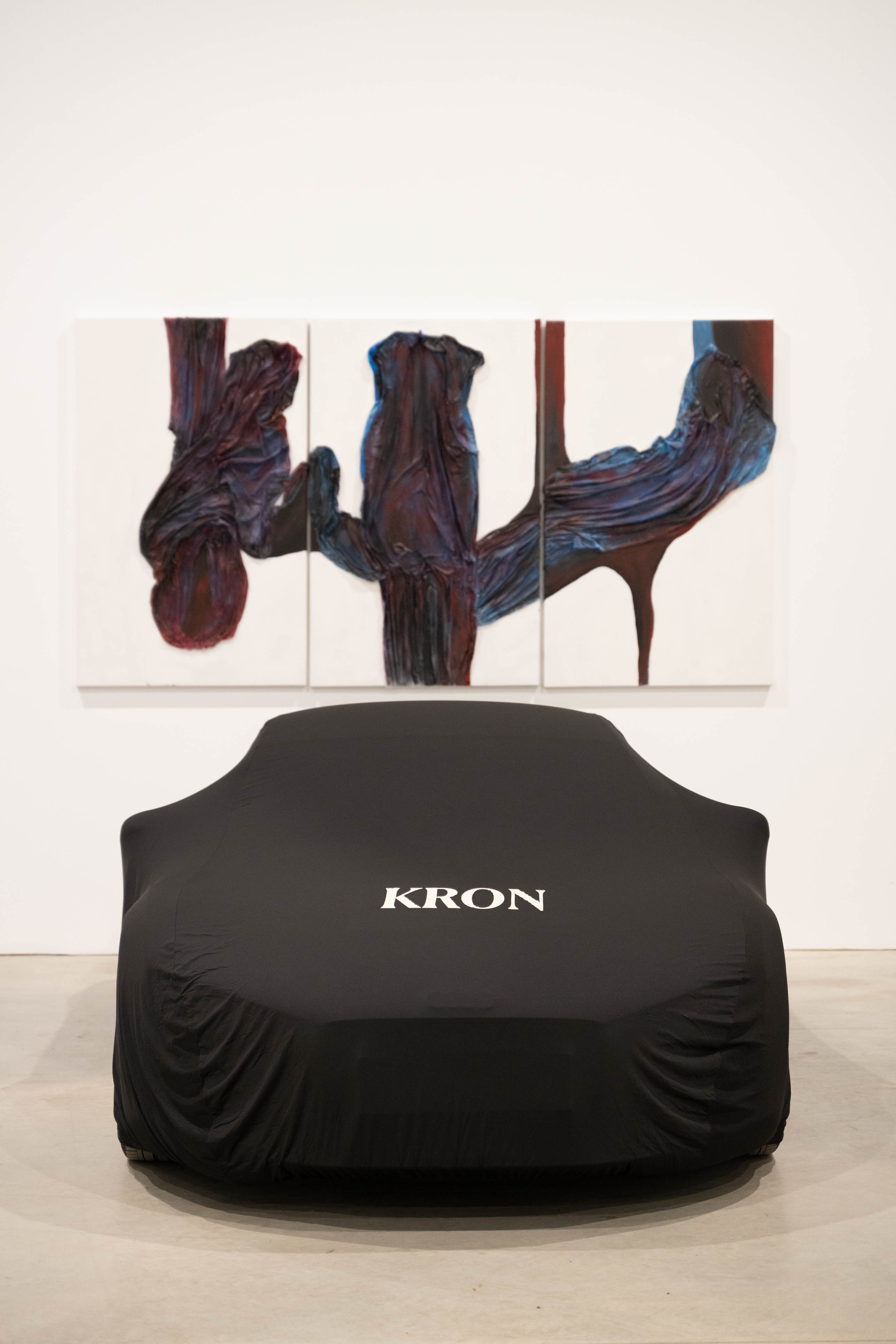
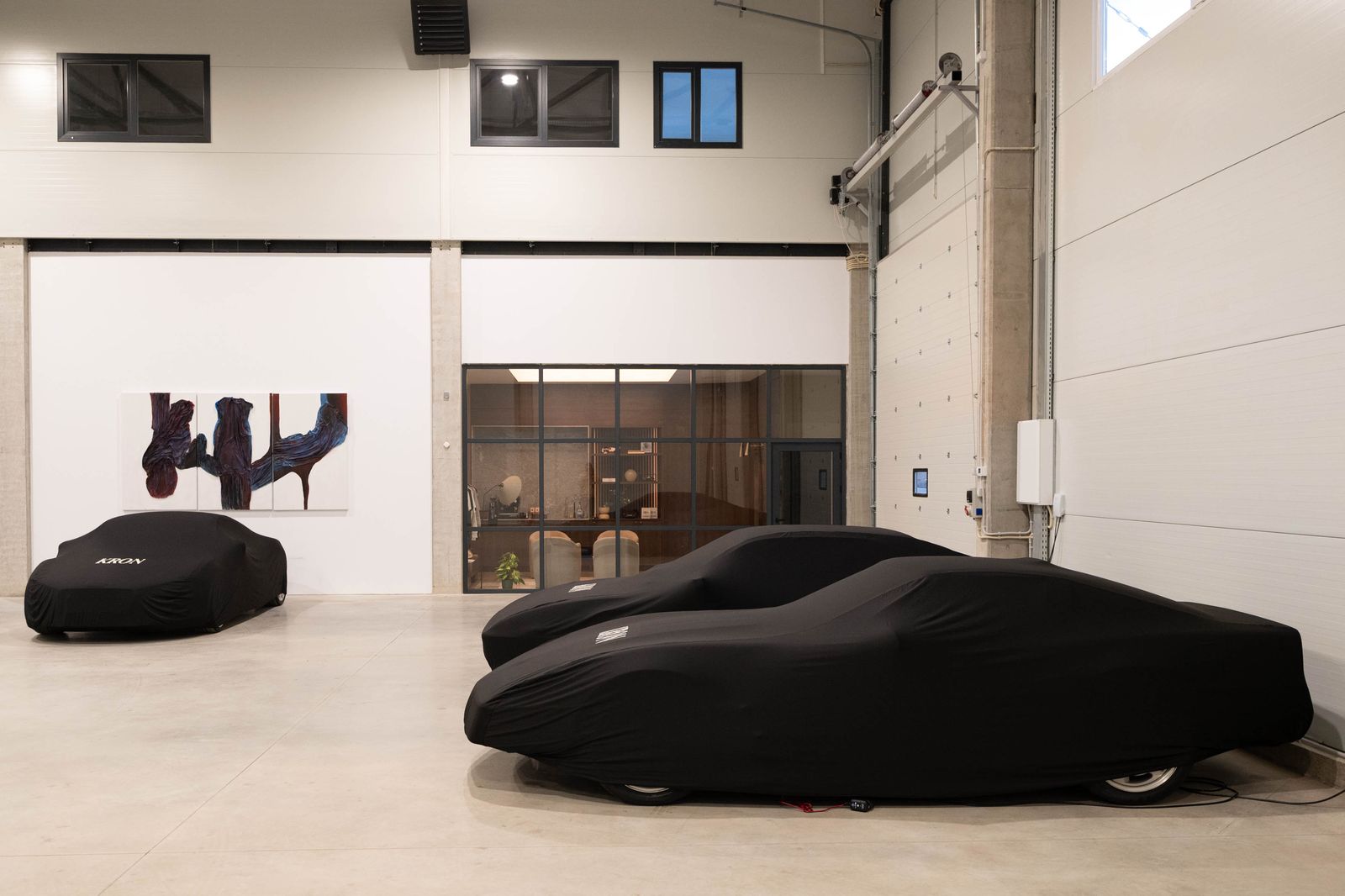
Premium protective cover. Each car is covered individually, protecting the paint from dust and airborne contaminants.
Discreet number plate covering. Privacy is maintained as standard — your car is not identifiable to anyone who should not know it is there.
24/7 CCTV surveillance. The facility is monitored around the clock with a guaranteed response time of under ten minutes.
Professional detailing on arrival. Every car enters clean, properly documented, and in a recorded condition.
2. How These Conditions Protect Your Car Better Than Street Parking or a Standard Garage
To understand why controlled storage matters, it helps to understand what uncontrolled storage actually does to a car — even over a single winter.
Brake Discs: The Hidden Cost of Humidity
Brake discs are made from cast iron, a material that reacts rapidly with moisture. Surface rust can form in as little as 24 to 48 hours after rain or condensation. In a humid outdoor environment, this process never stops.
For a car parked occasionally on the street or in an uncontrolled car park, light surface rust is constant — but usually harmless, cleared by the heat and friction of braking. The problem begins when a car sits unused for weeks or months in damp conditions. At that point, rust moves past the surface. It begins to pit. Pitting creates an uneven braking surface, causes vibrations, accelerates pad wear, and — if left long enough — makes the disc itself structurally unsafe.
At that stage, replacement is not optional. For a standard car, replacing discs and pads across both axles typically costs between €400 and €800 in parts and labour. For a high-performance or classic vehicle — the kind of car most Kron clients own — the figure rises considerably: specialist brake components for a Ferrari, Porsche, or high-end BMW can range from €800 to well over €2,000 per axle, depending on the model and whether OEM parts are required.
At Kron, the controlled humidity environment and regular recirculation ensure brake discs never reach the pitting stage. The discs stay clean, functional, and undamaged throughout storage.
Battery Degradation
A car battery left to drain completely does not simply go flat — it sulfates. Lead-acid battery cells exposed to a full discharge develop lead sulfate crystals on the plates that reduce capacity permanently. Lithium-based systems in modern performance cars are equally unforgiving of deep discharge cycles.
Replacing a standard battery costs between €100 and €250. On a modern luxury vehicle with a sophisticated electrical architecture — think integrated start-stop, active suspension, or complex infotainment systems — the correct OEM battery can cost €400 to €700, plus specialist labour to register and calibrate it with the vehicle's ECU.
The trickle charger at Kron costs a fraction of that. It works continuously, silently, and prevents the problem entirely.
Tyres, Rubber, and Seals
A car sitting stationary develops flat spots on its tyres — areas where the tyre's contact patch deforms under the sustained weight of the vehicle. In cold or fluctuating temperatures, the rubber compounds harden, making flat spots worse and slower to recover. Mild flat spots often correct themselves after a few kilometres of driving. More severe ones, developed over months in cold conditions, can require tyre replacement.
Beyond tyres, rubber seals throughout the car — door seals, window seals, coolant hoses, brake lines — are all affected by temperature extremes and humidity cycling. A stable, above-15°C environment dramatically slows this deterioration.
Paint and Bodywork
Paint damage in improper storage is largely invisible until it is too late. UV exposure through an uncovered garage window or under a cheap cover oxidises the clear coat. Moisture under a cover that does not breathe traps humidity against the paint surface, encouraging micro-blistering. Road grime and contaminants left on the paint become increasingly acidic over time, etching the surface.
At Kron, cars are detailed on arrival, covered with premium breathable covers, and kept in a stable indoor environment. The paint that went in is the paint that comes out.
Theft and Vandalism
A high-value car parked on the street or in an unsecured car park is simply a target. In Romania, as across Europe, catalytic converter theft, tyre theft, and opportunistic damage are real risks for premium vehicles. An unmonitored garage without security systems offers little meaningful protection.
Kron's 24/7 CCTV with a sub-ten-minute response guarantee, combined with the physical security of a purpose-built facility, means a stored car is as close to risk-free as a vehicle can be. Insurance premiums often reflect this — cars stored in certified secure facilities frequently attract lower rates than street-parked or poorly-secured vehicles.
3. Reasons to Store Your Car at Kron
The reasons are straightforward, and they add up fast.
Your car is a financial asset. A well-preserved classic or low-mileage sports car holds — and often grows — its value. A neglected one depreciates. The difference between a properly stored 1980s Ferrari and one that spent winters in a damp garage can be tens of thousands of euros when it comes to resale or insurance valuation.
Romanian winters are genuinely hostile to vehicles. The combination of cold temperatures, high humidity, road salt from November through March, and significant temperature swings makes Romanian conditions among the worst in Europe for car preservation. A car left outside or in an unheated space over a Romanian winter ages several years in a few months.
Kron does the work so you don't have to. Periodic recirculation, battery maintenance, condition checks — all of this happens without the owner needing to think about it. The car is monitored, maintained, and ready to drive whenever it is needed.
24-hour collection, any day. Stored does not mean inaccessible. With 24 hours' notice, the car can be ready for collection at any time, including outside working hours. If a weekend drive presents itself, the car is there.
A space guaranteed to be yours. Storage clients can exchange cars weekly, with the same space held regardless of which car occupies it that week. For owners of multiple vehicles, this is a practical and rare advantage.
Full membership included. Storage is not just storage at Kron. It comes with access to the members' lounge and bar, the co-working space, events, the F1 simulator, and the broader community. This is not a warehouse service. It is a club membership that also protects your car.
4. The Real ROI of Storing Your Car Properly
This is where the numbers speak plainly.
Brake Discs
A car left in damp, uncontrolled conditions over a Romanian winter will almost certainly develop pitted brake discs if it sits unused for two months or more. On a standard performance vehicle, replacing all four discs and pads — labour included — costs from €600 to €1,500. On a specialist or vintage vehicle, significantly more.
This is not a theoretical risk. It is a predictable outcome, and one that Kron's controlled humidity and recirculation programme eliminates.
Battery
One deep-discharge event requiring battery replacement: €150 to €700 depending on vehicle. At Kron, the trickle charger prevents this from ever happening. Battery lifespan extended by two to three times means the battery you have lasts far longer — and maintains the resale value of the car (a dead or compromised battery in a stored vehicle is a red flag to any prospective buyer).
Tyres
A set of premium tyres costs €600 to €1,600 for a performance vehicle. Flat-spotting through improper storage can shorten their useful life significantly. Kron's recirculation programme keeps contact patches rotating and rubber in its designed condition.
Paint Correction and Detailing
A full paint correction on a high-value vehicle — removing the oxidation, micro-blistering, and surface etching caused by improper storage — costs between €500 and €2,000 depending on severity and vehicle size. Prevention, in the form of proper storage conditions, costs a fraction of this.
Long-Term Rust
Structural rust on a classic or vintage car is among the most expensive repairs in automotive restoration. Rust that originates from frame penetration, wheel arch deterioration, or floor pan corrosion can cost anywhere from €3,000 to €20,000 or more to address properly. It is also, once established, a permanent mark on a car's history that depresses its value and its insurability.
A stable humidity environment eliminates the primary condition required for structural rust to begin. This alone, for a vintage car, represents thousands of euros in preserved value over time.
Insurance and Security
Cars stored in certified, monitored facilities frequently qualify for lower insurance premiums than street-parked or inadequately secured vehicles. Beyond pure cost, the peace of mind of knowing a car is in a monitored, secure space — rather than on a street or in an anonymous car park — is a value in itself that is difficult to price but immediately understood by anyone who owns a vehicle they actually care about.
The Calculation
Kron Collection's annual storage contract starts at €300 per month. Against that, consider:
One brake disc replacement event on a performance vehicle: €800 to €2,000. Prevented.
One battery replacement: €150 to €700. Prevented.
One paint correction: €500 to €2,000. Prevented.
Tyre damage from flat spotting: €600 to €1,600. Prevented.
Long-term rust on a vintage car: €3,000 to €20,000+. Prevented.
The cumulative cost of a single winter of improper storage, for a car worth caring for, can easily exceed what a year at Kron costs. And that calculation does not include the harder-to-quantify losses: the depreciation in resale value, the anxiety, the time spent managing repairs, and the damage done to a car that was bought as a pleasure — not a problem.
Proper storage is not what you do after spending money on a great car. It is part of the investment itself.
Discover climate-controlled storage and concierge care, built for collectors, by collectors.